


Musically inclusive practice involves making sure young people’s music is HEARD:
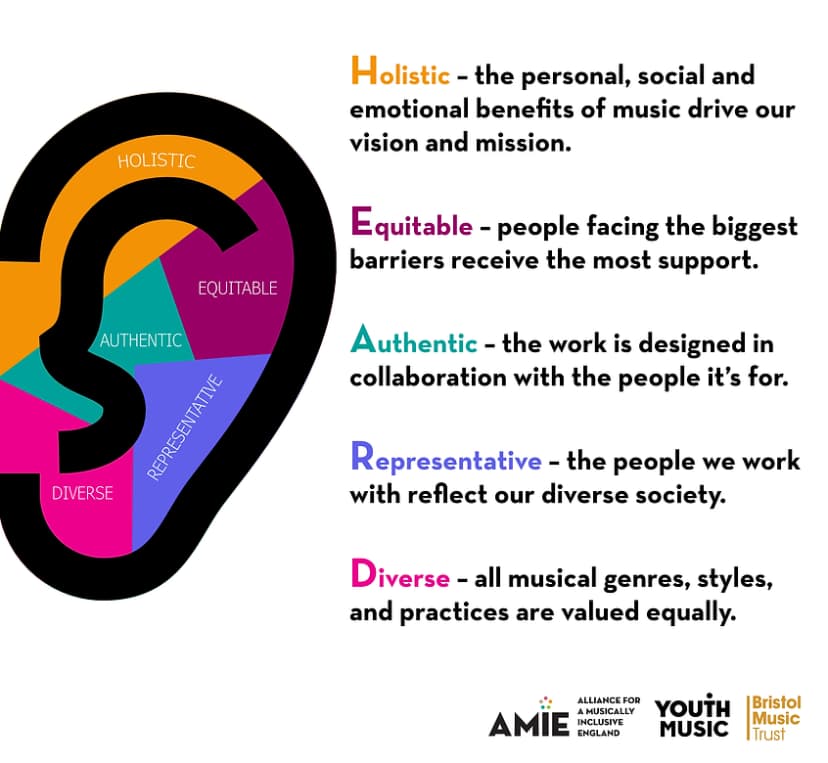
Our strategy sets out a plan for building a culture of inclusive music education, where all children and young people are valued and recognised for their unique qualities, ideas, voices and perspectives and where they can see the Hub providing a range of diverse musical opportunities and progression pathways.
David Austin is the lead manager for inclusion at WFMS, with responsibility for improving and developing the Hub's inclusive practices.
For any queries relating to our inclusion work please contact David Austin via the main office.
We all know that learning and making music can make a massive impact on young people. It can improve wellbeing and has a wealth of benefits for their intellectual, personal and social development. But despite this, too many are missing out because they face a range of barriers to participating in music education.
We’re one of fifteen music services from across England who are part of Changing Tracks, a programme of support and learning for and with music services wanting to improve equality, diversity and inclusion. It's run by Hertfordshire Music Service and funded by Youth Music.
We helped each other to be more inclusive through a peer network facilitated by Music Mark, funding for action research, support and challenge, advice and resources.
At Waltham Forest Music Service we’re also one of nine Changing Tracks partners who carried out action research with our staff teams to research this further. We’ve explored what helps and hinders us and found ways to dismantle barriers and make our organisations and activities more equitable, diverse and inclusive.
Changing Tracks is part of the Alliance for a Musically Inclusive England — a growing network of organisations working together to:
Promote equity in music education
Support others to do the same through advocacy, CPD, resources, and strategic alliances.



Music Mark logo